Iran outlines capital market reforms to drive growth
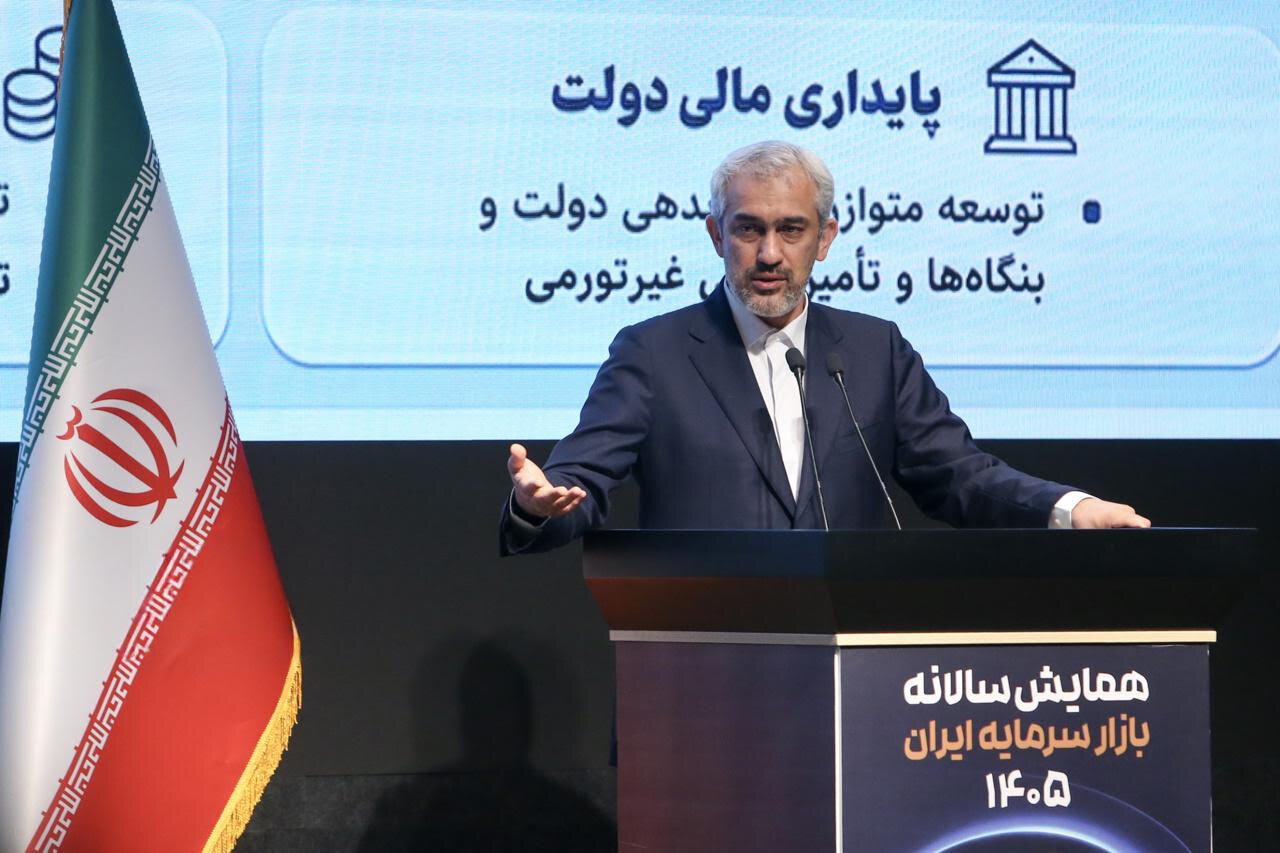
TEHRAN- The Second Annual Iran Capital Market Conference opened in Tehran on Saturday under the theme “An Inclusive Capital Market: An Opportunity for Reinvention and Growth,” with President Masoud Pezeshkian, Economy Minister Seyed Ali Madanizadeh, Central Bank Governor Abdolnaser Hemmati and Securities and Exchange Organization Head Hojjatollah Saeedi attending.
Addressing the conference, Economy Minister Seyed Ali Madanizadeh presented the government’s plans to restore stability, raise capital formation and productivity, and expand the capital market’s role in financing production.
adanizadeh said macroeconomic stability and predictability are prerequisites for growth. Despite shocks from two wars, siege, sanctions and accumulated imbalances, the government has sought to regain control and restore stability. Inflation remains high, but joint action by the Central Bank, Economy Ministry and Planning and Budget Organization has sharply reduced monthly inflation; single-digit inflation remains the goal. He said the government avoided imposing a budget deficit on the Central Bank, reformed debt and bond markets, and is addressing banking imbalances to prevent monetary-base growth. Forex policies aim to restore predictability, though their effects lag.
Growth, he said, depends on capital formation and productivity. The “Ruyesh” plan promotes investment funds; foreign-currency funds and bonds can bring back funds that left the economy and channel them into profitable, export-earning projects. Private equity funds will launch soon to invest in large firms and projects, restructure companies and exit after development. A “Plan 20” identifies major national and leading projects, to be introduced with the Iran Investment Organization, to direct financing toward large projects.
The government will gradually remove market interventions. It eliminated intervention in government bond yields and is addressing interbank and banking-market distortions. The stock market’s price fluctuation band—described as one of the worst interventions because it prevents prices from reflecting true value—will be opened once relative stability returns; war and siege volatility have delayed it. Exchange-rate reform has already removed many administered prices, and trade liberalization should follow. The state asset divestment fund will be listed on the capital market within days. Digital economy listings should rise to five companies, and privatization via the bourse should improve productivity.
On inclusion, Madanizadeh said firms raised about 100 trillion tomans through the capital market this year, much via “three-small” bonds for SMEs. Asset-backed tokens on digital platforms will let citizens, even in remote villages, invest. Legal obstacles to Saham Edalat (justice shares) have been removed with parliament’s help, with good news expected soon. Public participation in national housing projects will be introduced. More than 50 million investors need protection, transparency and better corporate governance; the Supreme Securities Council is preparing decisions. The government also wants public ownership through bourse listings. He urged participation in a “National Campaign: We Will Build.”
Addressing the same conference, Central Bank Governor Abdolnaser Hemmati said Iran’s economic future depends less on available funds than on the quality of financial architecture, capital allocation and converting savings into productive investment. Money and capital markets are complementary, not rivals. The Central Bank’s first task is monetary and financial stability: controlling inflation and preserving the currency’s value. Predictable inflation helps firms plan multi-year investment. Financial stability means the system can keep payments, lending and market financing working during shocks—especially important in the current neither-war-nor-peace situation. Bank asset quality and market liquidity are crucial. Clear monetary and foreign-exchange policies and stable government rules help firms plan. Monetary policy affects corporate financing costs, savings choices and, through exchange-rate changes, profitability; understanding these links helps the Central Bank assess its decisions, with the debt market playing a key role.
MA
Leave a Comment